Friday, October 26, 2018

Questioning Strategies


I always felt like my teachers in high school had amazing questions for me as I sat through their lectures. If I said one thing, I had to be prepared for the retort or for one of my classmates to respond to what I had said. But, we were prepared, our teachers knew how to question us in order for us to think deeper. I remember the first time I had ever realized just how deep we were getting was when I had done a socratic seminar after we had read Martin Luther King Jr’s “Letter from Birmingham Jail.” This format was terrifying at first because it was so student driven, but in the end it was for the best in getting us to think about how to read a text and analyze it deeper. 
A socratic seminar requires students to have read and annotated a text to their fullest extent. Questioning what they don’t understand, what they want to know, what their classmates feel, etc. The student’s jobs are to not just stop at the initial reading of a text. Then, it is up to the students to question each other and to not debate with each other, but to have a discussion. Your job as a teacher is to prepare students for this by creating a classroom environment that allows students to feel comfortable with talking to one another. It is not about trying to be the loudest in the room, it is about making sure that everyone had a voice at the end. Every student should be able to speak and discuss the topic at hand and be able to give some sort of opinion or idea.
Image result for socratic seminar
As a teacher, your job is set up sample questions for students to take and run off with:
Who has a different perspective? Who has not yet had a chance to speak? Where do you find evidence for that in the text? Can you clarify what you mean by that? These questions give students an idea of how to continue a conversation on a text without just stopping at “I like it” or “I don’t like it.” Students become responsible for the answers they give. And the preparation leading up to the socratic seminar should be long and important, giving students time to prepare their own questions, and read through the text multiple times so that they can come up with some understanding. This allows students to become comfortable with what they are saying, because they feel so prepared to discuss something they know so well. Overall, it gives you an opportunity to help students learn how to question their own thoughts and each other as well as prepare them for questions that you may ask in the future. It is great preparation for the rest of the school year and sets the tone of how texts should be analyzed.

Saturday, September 29, 2018

Differentiation and Translaguaging


While reading through Tovani’s reading strategies in I Read It, but I Don’t Get It, I’ll admit that a lot of the strategies were familiar to me. I was lucky enough throughout my school career to have teachers and professors who were willing to share tips and tricks in regards to coding, annotating, creating connections, and making graphic organizers that allowed me to become the pretty proficient reader I am today. And I took these strategies for granted, I never thought about how these strategies weren’t obvious or even taught to a lot of the people I graduated with who were considered lower level or even how they might be useful to emergent bilinguals. So, this week’s prompt of trying to consider just exactly how to use some of these strategies to help differentiate or encourage translanguaging was really fun for me.
One of my personal favorite strategies from the book that I think could be used to differentiate and encourage translanguaging for emergent bilinguals was the “double-entry” diary. In it, students take a direct quote and page number and say what it reminds them of, what they wonder, to what they visualize, perhaps even all three across their journal and it looks like this:

Direct Quote and Page number
I wonder/This reminds me of/ I visualize

I propose that this would be awesome for differentiation and translanguaging for emergent bilinguals! When students are learning a new language, they have to also develop comprehension within their home language as well. I figured that adding another layer to the double entry diary would be for the best with leading to comprehension in both home language and English. 


Direct Quote and Page number
Translation to home language
I wonder/This reminds me of/ I visualize

By adding this translation, students are taking an interest in understanding their text within their home language, I believe they will be more likely to actually make connections between the text and social, political, and cultural references. Then, I believe that it would be a great exercise for them to complete with most of their readings, and keep an annual track of so that they can see their progress throughout the reading itself and throughout their year of reading! I also believe that through my reading of these diaries, I can begin to see where any discrepancies may lie for this readers. If their connections are no where near I need them to be, then I have a goal to set with them.

Saturday, September 22, 2018

YA Book and Antiracism


Image result for gabi, a girl in pieces
One of the best, most underrated books that I have ever read is called Gabi, A Girl in Pieces by Isabel Quintero. The book follows a teenage girl named Gabi as she goes through her senior year of high school. Throughout that school year, Gabi struggles with issues surrounding her race, drug abuse from family members, first love, sexuality, gender roles, and how race intersects with all of these. Gabi is literally “a girl in pieces” as she figures out her social location within the world. It really was one of the best novels I had read in a while and I think it would make a great introduction to not only discussing intersectionality within the classroom, but beginning a discussion on antiracism.

As a class we read about the ways that we can reimagine ELA classrooms to really begin to discuss race and the ways it effects the culture of a classroom. One of the primary ways was allowing use of translanguaging, codeswitching, and allowing students to use their native languages within their writing and/or providing students with literature that includes different languages. Throughout Gabi, A Girl in Pieces, the main character and her family switch between English and Spanish. Though most of the novel is Gabi told through Gabi’s journal entries, she tends to explain situations in Spanish in ways that even students whose first language is English, could still use reading strategies and context clues to understand the writing.

Another way I could see this novel being used in the classroom is through its intense discussion of intersectionality (you could do an analysis of the title alone, just as I had mentioned above). When we talk about antiracist education, when we add the element of intersectionality we are able to spread an awareness to how our social location effects our perceptions and others perceptions of us. Throughout the novel (without spoiling), as a Latina, Gabi’s family holds certain expectations with her that force her to choose between being “a normal” teenage girl and one who is living up to her families expectations. I think having a discussion about how these specific moments where her family asks her to adhere to gender roles and how those gender roles may change depending on culture, would serve as an excellent introduction to intersectionality and anti-racism. For instance, Gabi has a hard time talking about her post-graduation life with her mother who holds certain expectations of her as a woman as compared to her brother. Overall, this book is definitely one I’d love to include in my curriculum one day, even if it’s finding a way to start a book club or something around it.

Monday, September 17, 2018

What is a Good Lesson for Me?


My world of lesson planning has obviously only just started as I begin my second year of actually being in classrooms and it definitely hasn’t been easy. I’ve had lessons that I felt like I knocked out of the park, and other days where I left the classroom wondering if I should even go into teaching, and that’s something that is hard to deal with, but it happens and I’m sure it happens to everyone. That’s the whole point of being a reflective practitioner, isn’t it?
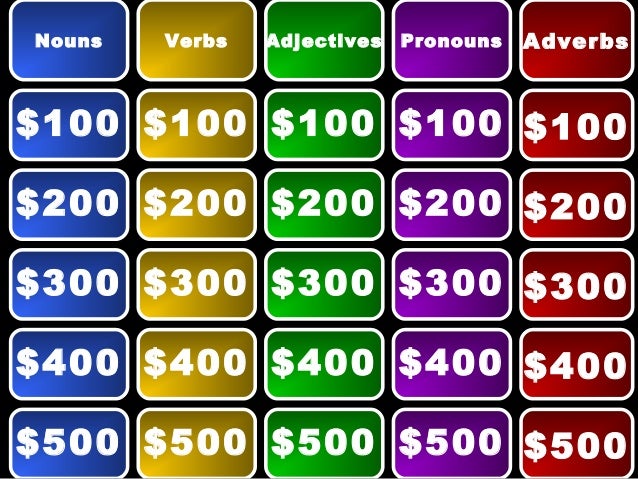
So, what makes a good lesson for me? Well, from my experience, it starts with making sure that I actually like what I am teaching. When I first starting doing lessons in middle school, I started with teaching punctuation and learning about grammar is definitely something that I never found interesting in middle school. But, what was important was that I find a way to make it fun in order for these students to actually remember what we taught, so we made it into a jeopardy game, something that was engaging and competitive for the students to learn. So, although it was something I wasn’t exactly passionate about, it was fun to make it into something where students felt comfortable in having fun while learning some new material and I had fun becoming Alex Trebek for an hour.
Image result for grammar jeopardy
Other times, I’ve had content that I was super passionate about, like Number the Stars by Lois Lowry, but the students were totally not into it. It became a question of “how can I fix this so they’re having a little more real for them?” Well to start the students had no idea what the Holocaust even was, so how were they supposed to know the cultural impact that that book could have and the comparisons that they could draw to it to the current state of America. I knew that I could definitely find ways to teach about social justice with content on the Holocaust so I thought it would be easy. Unfortunately, the students did not even have an idea of what the Holocaust was so I had to devote time to actually teaching them about that. However, I remember one specific moment where one of my students actually brought up the comparison how some police officers in the novels had stopped the main characters and it had reminded her of some of the stories she had heard in the news about racial violence and police brutality and blew my mind to hear that comparison without even prompting it. I think we would have gotten there eventually, but to hear that a student had come to that comparison alone was fantastic. It made me feel like the rest of my lesson that day could not have gone any better. Overall, I think that my lessons on subjects that I may not be as passionate about need to be told in the most fun way possible in order for me to be just as involved as the students and when its the opposite, I want to make sure that the students are able to draw comparisons at least to the larger world around them so they can feel like the content is not that far away from them.

Friday, September 14, 2018

Using Technology to Teach About Race/Racism

I feel like I owe technology a thank you for exposing me to both the good and the bad around the world. Without, I don’t think I would have heard half as much about the Black Lives Matter movement, the police brutality still evident in the world, maybe I would even believe that racism was a distant memory in our country’s past. All very scary and very real possibilities. But due to my social media presence, my thirst for finding as many facts about the story, and some pretty awesome teachers, I find myself constantly questioning and analyzing the media I consume. So, the question then becomes: how do I put my love and appreciation of technology into teaching about race and racism.

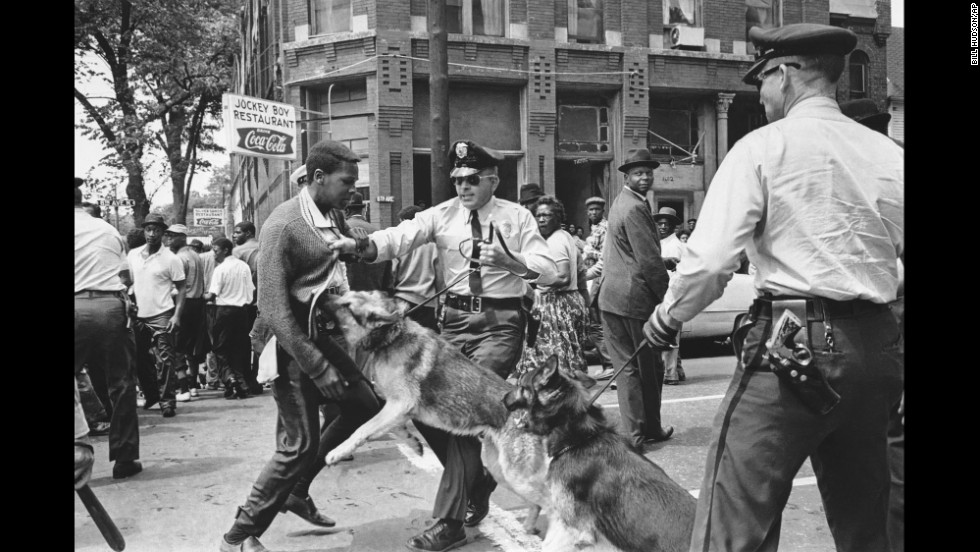
I think it’s really important to use the past to amplify the present. And race and racism are hard topics to talk about. So, the backdrop of the past may be just what i needs to come to light. I believe that using historical photos from the Civil Rights movement and having students, in groups, reflect on what the photos show, represent, how they feel seeing them, what emotions/feelings these pictures bring up. Each group would get one photo and would be asked to use a graphic organizer in order to organize their thoughts on a Google Doc.

A police dog jumps at a 17-year-old civil rights demonstrator in Birmingham, Alabama, on May 3, 1963. The image appeared on the front page of The New York Times the next day.
Then, I would bring up these photos of the current events from the Black Lives Matter movement (or any current photos from the latest events happening). Again, each group would get their own photo that I would have them fill out the same graphic organizer. I think at that point I would also want to ask them about how the two pictures, fifty years apart feel similar or different to them. I think it would also be a great way to see how their mindsets are when they first begin to talk about race or racism and you can adjust any other future lessons accordingly.

Lastly, I would have them share out their graphic organizers to the class, showing their comparisons and the differences. Plus, they would display to the class their thoughts on how they believe that society has changed or where it hasn’t over the past fifty years. And perhaps they could also share some theories as to why they believe that society has or hasn’t changed. I just think it would be an interesting, low-stakes way to get students to start to think about race and racism, but also for a teacher to see where their class is at in their thought processes.

Friday, September 7, 2018

Critical Literacy


Learning about critical literacy was one of my favorite parts of doing the education program here at RIC. I never really understood what it was when I was in high school, but I only seemed to have certain teachers that really gave me those skills that critical literacy wants us to learn: to question an unjust society and to create dialogue from between both students and their teachers in order understand this questioning. I had teachers who just stuck to the rows and desks and taught us about how Act III, scene iii, line 87 of Hamlet is important to Shakespeare's ultimate meaning. And then there were those who asked me, "well, why do you think the Disney princesses are the way that they are?" and then had me base an entire research project on exactly that question. We discussed, we questioned not only each other but why I was researching and why it mattered. That was the kind of education that I loved, and it was one I wanted to continue with my own students.
So, when thinking about how to teach critical literacy, the first thing that came to mind was, as my teachers liked to call it, "hacking ads." It's also called HackJams as described by this post on TeachingTolerance.org by Annie Hunyh.
Basically, students would search through the internet or through magazines of advertisements. That way students are picking out pieces of media that they are consuming and looking over every day of their lives. From there, they begin to look at it while asking questions like: Who is represented? Who is not? Who is this advertisement made for? etc. From there, the students then redesign the ads, adding in those oppressed voices, redesigning the ad to show the voices of the oppressed or create something that has a completely new meaning. In terms of critical literacy, this lesson is amazing in creating dialogue among the teacher and the students, pointing out the social injustices in the every day and then coming up with ways to "fix" these injustices. It gets the students thinking about the world in that they interact with every day. I found some amazing examples here.
First we start with the ad:
Controversial enough, right? A woman's body sexualized to the extreme by comparing her body to the grand opening of a clothing company. So, what can reimagine this ad to look like? Amazing artists from around the world answered that question:
Very, very different messages. From sexualized in order to appeal to the male gaze to providing strength, love, power. And I think it gives hope to students that what they see is not the world, they can redefine the standards so that it matches the beauty they wish the world would provide them. They have the power to change one ad, so who knows, maybe they'll be the ones designing them one day!

Friday, August 31, 2018

My Teaching Manifesto

I am a teacher who stands up for students who are oppressed against the system that keeps them from believing that they can achieve so much more, who is in favor of equality and equity within the educational system against individuals who believe that the work in education is done, who is a supporter of speaking out in order to cause change against teachers who refuse to step forward in order to help their students for the better, and who is a defender of teaching social justice within the classroom against administrations and systems that claim that there's no longer a need to continue fighting. I am a teacher who favors continuous learning throughout my life and against not reflecting on what I am doing, saying, teaching, and learning. I am a teacher who rejects that this is "just the way things are", because it is responsible for all of the pain, confusion, and struggles of students who remain oppressed by those in power. I am a teacher full of empathy and open-mindedness, in spite of the pessimistic outlooks that I have heard from many teachers throughout my time in classrooms over the past few years. I am a teacher who refuses to give up the good fight especially when I have so many years ahead of me in this career. I am a teacher proud of the leaps and bounds being made by teachers and students who are standing up for change in the education system. If I do not struggle for change, then I will no longer be the person that I thought I was.